THREE:In sculpture at this period we stood much lower than in painting. Here we had no Hogarth, nor even a Thornhill. All that was of any value in this art proceeded from the chisels of foreigners, and even in that what an immense distance from the grand simplicity of the ancients! The sculpture of Italy and France was in the ascendant, but Bernini and Roubiliac had little in common with Phidias and Praxiteles, and our own sculptors presented a melancholy contrast to the work of artists of the worst age of Greece or Rome; there is scarcely a name that is worth mentioning. The best of the native sculptors was John[164] Bushnell, who was employed by Wren to execute the statues of the kings at Temple Bar; and Francis Bird, who was also employed later by Wren to execute "The Conversion of St. Paul," in the pediment of the new cathedral, the bas-reliefs under the portico, and the group in front, all of a very ordinary character. His best work is the monument of Dr. Busby in the transept of Westminster Abbey. Besides this he executed the monument of Sir Cloudesley Shovel, also at Westminster, and the bronze statue of Henry VI., in the quadrangle of Eton College, both very indifferent. Gibbs and Bird executed the ponderous and tasteless monument of Holles, Duke of Newcastle, at Westminster, and the fine old minster is disgraced by a crowd of still more contemptible productions of this period. These can only be equalled in wretchedness by the works of a trading school, who supplied copies in lead of ancient gods, goddesses, shepherds, shepherdesses, etc., for the gardens of the nobility, which soon swarmed in legions in all the gardens and areas in and around the metropolis. Amongst the chief dealers in this traffic were Cheere and Charpentier, who employed foreign artists, even, for such images, and it was the fortune of Roubiliac to commence his English career with the former of these traders. The three chief foreigners of this period were Rysbraeck, Scheemakers, and Roubiliac, who were copyists of the French sculptors Coysevox, Bouchardon, and Le Moyne, as these had been of Bernini.
FORE:When Montcalm was informed of this wonderful feat, he thought it merely some new feint to draw him from his lines; but when he had ascertained with his own eyes the truth, he said, "I see them, indeed, where they ought not to be; but, as we must fight, I shall crush them." He immediately led his troops over the bridge of the St. Charles, and up to the eminence above the town. There he found the English already advanced in order of battle to within cannon-shot of Quebec. Wolfe had drawn them up with much judgment. His left wing was formed in what military men call en potence¡ªthat is, facing two ways, so as to guard against being outflanked. In this wing, too, he had placed a regiment of Highlanders, one of those which Pitt had formed, and which had already shown its bravery. His right, extending towards the St. Lawrence, had in the van the Grenadiers who had distinguished themselves at the taking of Louisburg, supported by a regiment of the line. Wolfe had taken his post on this wing. The sailors had managed to drag up one cannon, and they had seized four other small guns at the battery they had passed; that was all their artillery. But in this respect Montcalm was no better off, for in his haste he had only brought along with him two guns. He had ordered a cloud of Indians to hover on the left of the English, and had lined the thickets and copses with one thousand five hundred of his best marksmen. These concealed skirmishers fired on the advancing pickets of the English with such effect, that they fell back in confusion; but Wolfe hastened forward, encouraged them to dash on, and ordered the first line to reserve their fire till within forty yards of the enemy. The men well obeyed the order, and marched briskly on without firing a shot, whilst the French came hurrying forward, firing as they came. They killed many of the English, but, as soon as these came within the forty yards' distance, they poured a steady and well-directed a volley into the enemy that did dreadful execution. Wolfe, with characteristic enthusiasm, was in the front line, encouraging them by voice and action, and in less than half an hour the French ranks broke, and many began to fly. Meanwhile Wolfe, exposing himself to the very hottest fire, had been wounded in the wrist by nearly the first discharge; and he had scarcely wrapped his handkerchief around it, when another bullet hit him in the groin. Still appearing to[136] pay no attention to these serious wounds, he was in the act of inciting his men to fresh efforts, when a ball pierced his chest, and he fell. He was carried to the rear, and, whilst he seemed to be in the very agony of death, one of those around him cried, "See how they run!" "Who run?" exclaimed Wolfe, raising himself, with sudden energy, on his elbow. "The enemy," replied the officer; "they give way in all directions." "God be praised!" ejaculated Wolfe; "I die happy!" and, falling back, he expired. Nearly at the same moment Brigadier Monckton was severely wounded, and Brigadier Townshend took the command, and completed the victory. Montcalm, also, had fallen. He was struck by a musket-ball whilst endeavouring to rally his men, and was carried into the city, where he died the next day. When told that he could not live¡ª"So much the better," replied this brave and able man; "I shall not then live to see the surrender of Quebec." His second in command was also mortally wounded, and being taken on board the English ships, also died the next day. Of the French, one thousand five hundred had fallen, and six hundred and forty of the English. On the 18th September, five days after the battle, the city capitulated, the garrison marching out with the honours of war, and under engagement to be conveyed to the nearest French port. Other fragments of the defeated army retired to Montreal.One Samuel Downie was next arraigned on the[440] same charges, on the 5th of September, as an accomplice of Watt. But it appeared that he had been rather the dupe of Watt and the spy-employing Government than anything else; and though the jury pronounced him guilty, they recommended him to mercy. He was respited and eventually pardoned; but Watt underwent his sentence, so far as being hanged and beheaded,¡ªa warning to spies how they trusted a Government equally faithless to the people and to the tools by which they sought to betray them.
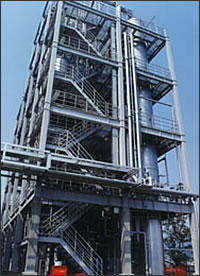
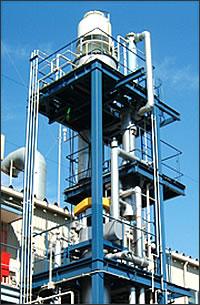
Methanol refinement systems, amyl alcohol refinement systems, ethanol refinement systems, hexanol distillation systems, propanol refinement systems, cyclohexanol distillation systems, isopropanol dehydration systems, ethylene glycol recovery systems, and butanol distillation systems.
FORE:"I will try to reach the water hole. Leave a man there for me with a horse. If I don't¡ª" he forced a laugh as he looked up at the buzzard which was dropping closer down above him.
Hexane distillation systems, tall oil distillation systems, benzene distillation systems, lubricating oil refinement systems, xylene-free distillation systems, low-boiling gas distillation systems, ethylbenzene recovery systems, fusel oil distillation systems, naphthalene distillation systems, propylene recovery systems, and turpentine oil distillation systems.
FORE:
Ether distillation systems, camphor distillation systems, epichlorohydrin distillation systems, aniline distillation systems, dioxane refinement systems, acetonitrile distillation systems, furfural refinement systems, formalin distillation systems, cyclohexane distillation systems, monoethanolamine rectification systems, polyglycol ether distillation systems, dimethylformamide recovery systems, acrylic glycol ether distillation systems, acrylonitrile refinement systems, acetone recovery systems, pyridine distillation systems, methyl ethyl ketone recovery systems, picoline distillation systems, methyl isobutyl ketone recovery systems, and acetaldehyde recovery systems.